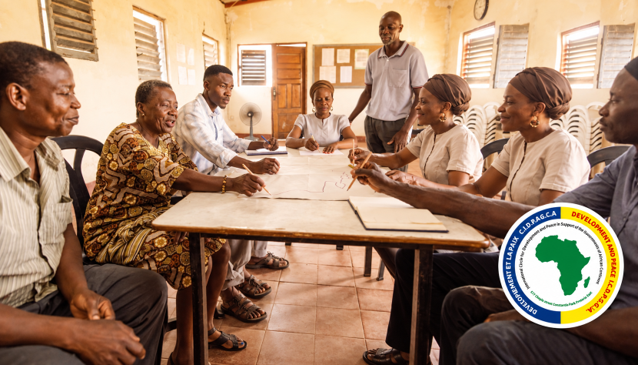
Imagine a livelihood project arriving in a community where access to land is disputed. The project may create paid work. If its selection process is opaque or excludes families who bear the costs, it may also deepen a grievance. That is why the question for a peacebuilding practitioner is more demanding than whether an investment generates growth. It is who can take part, who benefits, who bears the risk and who has a credible way to raise a concern.
Economic opportunity can matter greatly to stability, especially where young people see few routes to secure work. Yet poverty or unemployment alone does not explain violence. The United Nations Development Programme’s 2023 study of pathways into violent extremism drew on nearly 2,200 interviews across eight countries. Among voluntary recruits in its sample, one-quarter cited the hope of work as their main reason for joining. This describes respondents in specific settings, not the probability that an unemployed person will join an armed group. The same body of research points to governance, injustice and experiences with state institutions. [1][2]
Investment needs a peace pathway
A project can contribute through several routes: paying local workers fairly, buying from local firms, connecting producers to markets and making useful services more reliable. Those gains are easier to sustain when people can influence decisions about resources that affect them. The joint United Nations–World Bank study Pathways for Peace stresses grievances linked to exclusion from power, resources, security and justice. More output does not automatically resolve those grievances. [3]
Consider the design choices in a market-access programme. A grant for stalls may support enterprise, but an unclear allocation process can turn a public asset into a source of resentment. A road can connect farmers to customers, but its route and compensation arrangements can create a dispute. A training programme may issue certificates while graduates still lack buyers, equipment or transport. These are examples of decisions to examine during design, not descriptions of a CIDPAGCA programme.
The World Bank describes community and local development as a way to place resources and decisions closer to communities. Its March 2026 brief links local infrastructure, services, employment and support for microenterprises with community decision-making. That is a programme approach, not proof that every local project prevents conflict. Results depend on who participates, how decisions are made and whether an institution can respond when something goes wrong. [4]
Four design tests for practitioners and donors
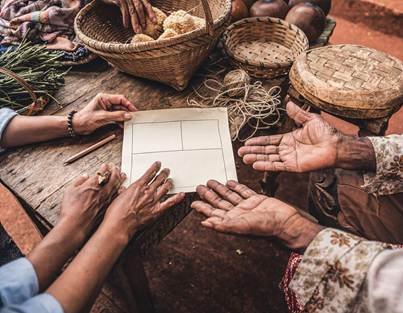
First, ask who defines the opportunity. Community consultation must reach beyond the most visible leaders. Women, young people, displaced people, informal traders and people who live farther from the project site may face different costs and barriers. Participation is meaningful when those views can change the activity, its location or its rules. Keep a record of what people raised and how the project responded.
Second, trace the distribution of benefits and burdens. Count paid jobs, but also check their duration, wages, safety and accessibility. Record who receives contracts and who loses access to land, water or a trading space. A project can report strong aggregate income gains while leaving one group worse off. If tension is already present, disaggregate results in ways that protect participants’ privacy and safety.
Third, make the grievance route usable. People need a confidential, accessible way to challenge selection or report harm without losing eligibility. An unanswered complaint can weaken trust even when the original project decision was defensible. Set a response time, name an accountable team and check whether people believe the route is safe enough to use. Do not treat a low number of complaints as proof that no problem exists.
Fourth, measure both livelihoods and relationships. Appropriate measures may include income continuity, access to buyers, repeat participation, perceived fairness and the resolution of project-related disputes. The indicators should be chosen with the community and revisited over time. A short-term rise in earnings and a durable improvement in trust are different outcomes. Neither should be claimed without evidence.
How to learn without overstating impact
A programme should set a baseline before support begins and follow participants beyond the first disbursement or training session. Did people keep earning after six months? Did access improve for the groups that were previously excluded? Were complaints resolved to the satisfaction of those affected?
Compare observed changes with other economic and security developments in the area. A project can show that it delivered jobs or improved access without being able to prove that it prevented violence. Reporting the narrower result honestly gives funders and communities a better basis for the next decision.
Evidence collection itself needs care. Ask only for information the project needs, protect records that could identify people in a tense setting and obtain informed consent for any story or photograph intended for publication. People should be free to decline publicity without losing access to support.
What investment can and cannot do
Donors and investors should fund the ordinary work that protects a project’s peace contribution: local consultation, accessible participation, monitoring, grievance handling and adaptation. These costs are often less visible than a building or a loan, but omitting them can undermine the asset being financed. Procurement can also give local enterprises a viable market if standards, payment terms and support are realistic.
Economic projects cannot replace justice, accountable institutions or dialogue where a political dispute requires them. They can, however, be designed to avoid aggravating tensions and to expand practical choices for people who have been excluded. That requires cooperation among communities, implementers, public authorities and firms, with each party’s role made clear.
For CIDPAGCA, promoting sustainable peace through research, dialogue and community action means asking these questions before celebrating an investment total. We invite practitioners and development partners to examine where economic initiatives have widened participation, where they have fallen short, and what communities say would make the next project fairer.
Any future account of a named participant or CIDPAGCA intervention should be grounded in records and informed consent. The test of success is a livelihood people can use and a process they can trust.
Sources
[1] UNDP, Journey to Extremism in Africa: Pathways to Recruitment and Disengagement, 7 February 2023. https://www.undp.org/africa/publications/journey-extremism-africa-pathways-recruitment-and-disengagement
[2] UNDP, press release on jobs and recruitment, 7 February 2023. https://www.undp.org/press-releases/hope-better-jobs-eclipses-religious-ideology-main-driver-recruitment-violent-extremist-groups-sub-saharan-africa
[3] United Nations and World Bank, Pathways for Peace: Inclusive Approaches to Preventing Violent Conflict. https://www.undp.org/publications/pathways-peace-inclusive-approaches-preventing-violent-conflict
[4] World Bank, How Community and Local Development Is Helping Close the Jobs Gap amid Fragility, Conflict, and Violence, 2 March 2026. https://www.worldbank.org/en/results/2026/03/02/community-local-development-closes-jobs-gap-fcv-settings
Pingback: Strengthening Governance to Prevent Conflict: Lessons from Emerging Democracies – cidpagca-gh.org